 English
 français
 Deutsch
 español
 italiano
 日本語
Casio’s Rangeman is the sensor-equipped, outdoor-minded branch of G-Shock, built around getting useful information onto your wrist without surrendering shock resistance. But the name spans markedly different watches: the button-driven GW-9400, the GPS-navigation-focused GPR-B1000, and the heart-rate-equipped GPR-H1000 each take that brief somewhere different.
Introduced in 2013, the GW-9400 established the family with an altimeter, barometer and compass, plus Tough Solar power and radio-controlled timekeeping. Its dedicated sensor button and segmented digital display keep the experience distinctly traditional G-Shock. The much larger GPR-B1000, introduced in 2018, added GPS navigation and a ceramic case back that accommodates wireless charging; solar charging supplements its rechargeable battery. That generation is about recording a route and finding your way back, rather than simply taking a bearing.
The GPR-H1000 arrived in 2024 with GPS, an optical heart-rate sensor and a stronger emphasis on activity tracking. USB charging and solar assistance support a different power arrangement from the GW-9400’s solar-only system. Its higher-resolution display also changes the character of the watch: workout data and navigation through menus take precedence over the older model’s fixed display layout.
What owners love
- The triple sensor setup (altimeter, barometer, compass) is highly reliable and practical for outdoor use, making it stand out from other G-Shocks.
- Solar charging and atomic timekeeping mean owners rarely worry about battery life or setting the time manually, even after years of heavy use.
- The unique button guard design and textured buttons allow easy operation with gloves or in harsh conditions, which is appreciated by hikers and military users.
Common Criticisms
- The large case size feels bulky and awkward for many wrists, especially for daily wear or under sleeves.
- Navigating the menus and functions can be unintuitive, with owners often needing to consult the manual for less-used features.
- The negative (black) display version is hard to read in low light or at certain angles, frustrating those who rely on quick glances for information.
Reviews & Videos

Rangeman References
Right Now on eBay

Recent Forum Listings
View All →-
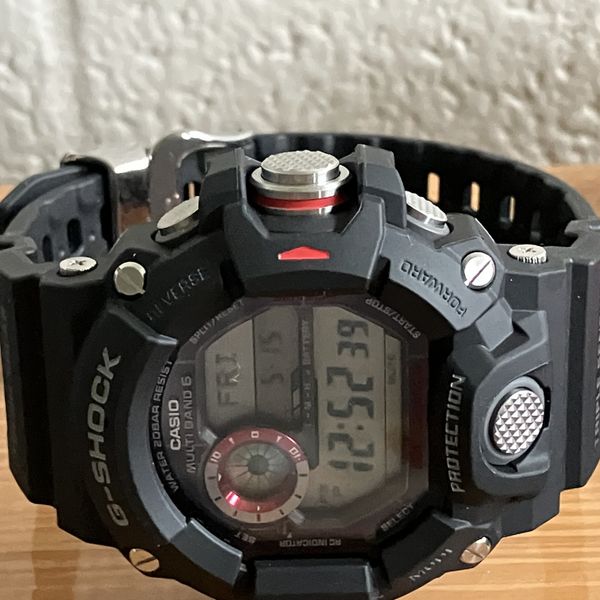 Casio Reduced Casio G-shock Rangeman NIB unused $175
WatchUSeek 5 months ago
-
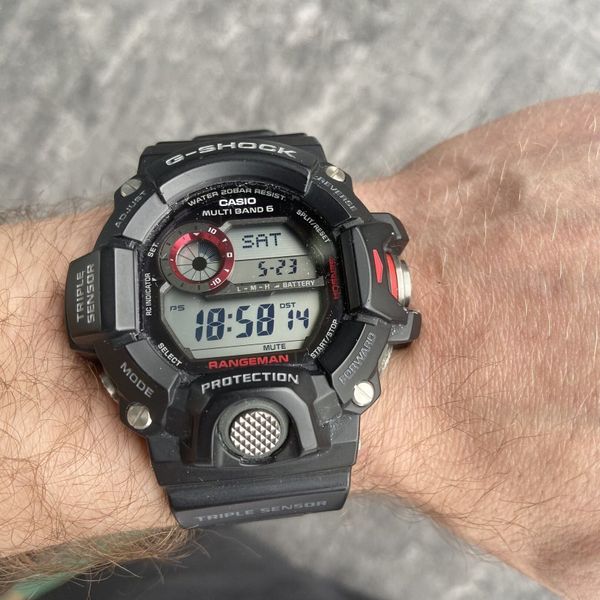 Casio G-Shock Rangeman 9400. PB 25/5 $123
Klocksnack 5 months ago
-
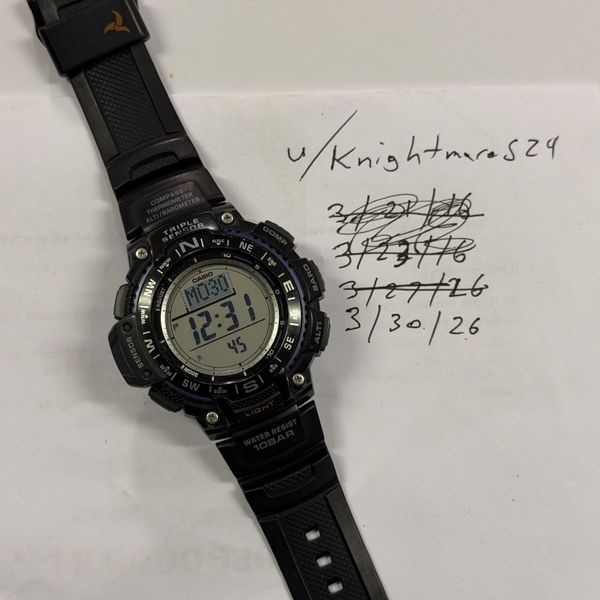 Casio Casio SGW-1000 Cheaper than all recent comps - NEW Bat… $55
Reddit 7 months ago
-
 Casio Casio G Shock Rangeman GW 9408KJ 7 – White “Love The S… $375
-
 Casio Casio G Shock Rangeman GW 9408KJ 7 – White “Love The S… $525
Other Casio Models
-
 #1
Casio G-Shock$112 $75 – $175328 listings 3 days ago
-
 #2
Casio GA-2100 (CasiOak) 48.5mm$85 $70 – $110249 listings 19 hours ago
-
 #3
Casio GW-5000 (Screwback) 48.9mm$210 $200 – $233121 listings 2 days ago
-
 #4
Casio GMW-B5000 (Full Metal) 49.3mm$339 $275 – $391118 listings 2 days ago
-
 #5
Casio DW-5600 (Square) 48.9mm$120 $92 – $161108 listings 2 days ago
-
 #6
Casio GW-M5610 46.7mm$89 $74 – $12388 listings 1 week ago
-
 #7
Casio GM-2100 (CasiOak Metal Bezel) 49.3mm$140 $119 – $16670 listings 2 days ago
-
 #8
Casio DW-5000 48.9mm$163 $150 – $17867 listings 4 days ago
-
 #9
Casio Duro 44mm$59 $50 – $7566 listings 18 hours ago
-
 #10
Casio Rangeman GW-9400 53.5mm$196 $165 – $21166 listings 4 days ago